Resin Mixing Ratio Chart
Epoxy and UV resin mixing ratios, working times, cure times and safety basics — measure by volume or weight correctly.
Resin projects fail most often at mixing: the wrong ratio, unmixed sides, or the wrong resin for the depth. This chart separates epoxy (by volume vs by weight), UV resin, and deep-pour resin, so you mix once and cure properly instead of ending with a sticky, soft piece.
Quick-Reference Table
The full data from this cheat sheet, right on the page.
| Resin type | Mix ratio | Measure by | Working time (approx.) | Full cure (approx.) |
|---|---|---|---|---|
| Epoxy — coating / tabletop (1:1) | 1 part resin : 1 part hardener | Volume | 30–45 min | 24–72 hrs |
| Epoxy — general (2:1) | 2 parts resin : 1 part hardener | Volume (check label) | 30–50 min | 24–72 hrs |
| Epoxy — some brands (3:1) | 3 parts resin : 1 part hardener | Volume (check label) | 40–60 min | 48–72 hrs |
| Epoxy — by weight brands | Follow label, e.g. 100 : 83 by weight | Weight only | Per label | Per label |
| Deep-pour epoxy | 2:1 or 3:1 (per label) | Per label | 2–4 hrs | 72 hrs – 7 days |
| UV resin | No mixing — ready to use | — | Until UV light applied | 2–5 min under UV lamp |
| Polyester resin | Resin + 1–2% catalyst (MEKP) | Weight/volume per label | 10–20 min | 24 hrs |
Printable Sheet Preview
High-Contrast Layout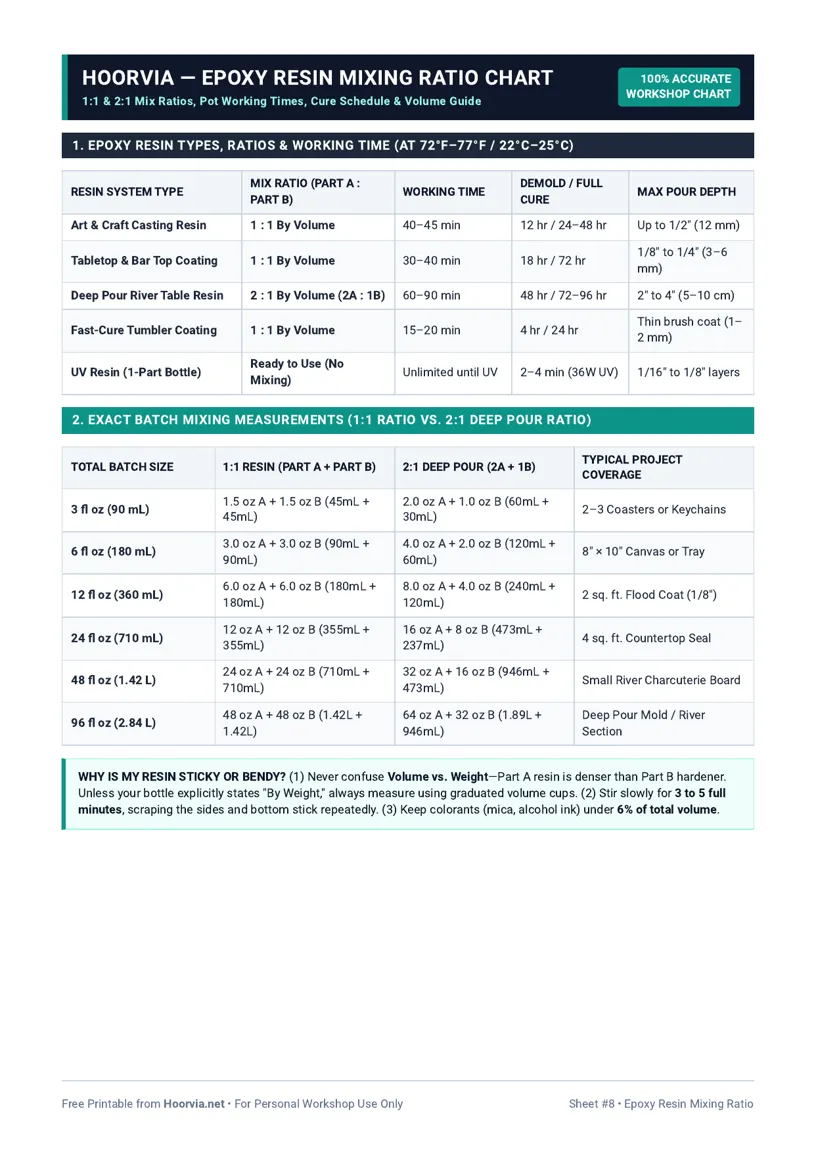
Download Your Free Printable Sheet
Download the printable PDF below. It is the same sheet shown in the preview above, ready to print on US Letter or A4 — open it and choose Print, with Scale set to Fit to Page.
💡 Pro Printing Tip: In your printer settings, set Scale to “Fit to Printable Area” and enable “Background Graphics” for color headers.
How to Print & Use This Chart
Print on US Letter or A4 and keep this chart outside the immediate pouring area, where resin drips cannot reach it — a wall above the workbench is ideal. Choose “Save as PDF” in the print dialog for a PDF copy in Letter or A4, and laminate the printed sheet so it survives a dusty workshop and can be wiped clean. Many resin makers keep a second copy inside a project notebook with notes on which brand and ratio they used for each piece, because “epoxy” alone is not enough information when you reorder months later.
Measure exactly: volume ratios need graduated cups, weight ratios need a scale, and the two are not interchangeable. Mix slowly for 3–5 minutes, scraping the sides and bottom, then pour into a second clean cup and mix briefly again to catch unmixed resin at the edges — this single habit prevents most sticky spots. Pour thin layers for coating resin (usually under 6 mm per layer unless the product is a deep-pour formula), pop surface bubbles with a quick heat-gun pass or torch held at a distance, and cover the piece to keep dust out while it cures. Do not rush curing with extra hardener; excess hardener does not speed curing, it leaves a soft, tacky finish. Work ventilated, wear nitrile gloves and eye protection, and never pour uncured resin down a drain. Record brand, ratio, room temperature and layer depth for every project, and your results will become repeatable instead of lucky.
Frequently Asked Questions (FAQs)
Why is my resin still sticky after days?▼
Usually the ratio was off, mixing was incomplete, or the room was too cold. Measure exactly, scrape the cup, and cure at the label’s recommended temperature.
Can I mix volume and weight ratios?▼
No. A 1:1 by volume product is not 1:1 by weight. Use the method your label states, or the cure will fail.
How thick can I pour epoxy?▼
Only as thick as the label allows — often 6 mm per layer for coating resin. Deep pours need a dedicated deep-pour formula or they overheat and crack.
Is UV resin the same as epoxy?▼
No. UV resin needs no mixing and cures in minutes under a UV lamp, but only in thin layers. Epoxy mixes and cures slowly without light.