Baby Feeding & Diaper Tracker Printable
A baby feeding and diaper tracker for new parents: time, breast/bottle, amount, wet/dirty diapers and sleep, all on one page.
New parents, night feeds and tired brains do not mix — it is easy to forget which side was last used or when the last diaper change happened. This one-page tracker logs feeding time, breast or bottle, amount, diaper changes and sleep, so both parents and any helper can see the pattern at a glance.
Quick-Reference Table
The full data from this cheat sheet, right on the page.
| Time | Feed: Breast L/R or Bottle (amount) | Wet Diaper ☐ | Dirty Diaper ☐ | Sleep / Notes |
|---|---|---|---|---|
| ___ : ___ | ☐ | ☐ | ||
| ___ : ___ | ☐ | ☐ | ||
| ___ : ___ | ☐ | ☐ | ||
| ___ : ___ | ☐ | ☐ | ||
| ___ : ___ | ☐ | ☐ | ||
| ___ : ___ | ☐ | ☐ | ||
| ___ : ___ | ☐ | ☐ | ||
| ___ : ___ | ☐ | ☐ | ||
| ___ : ___ | ☐ | ☐ | ||
| ___ : ___ | ☐ | ☐ |
Printable Sheet Preview
High-Contrast Layout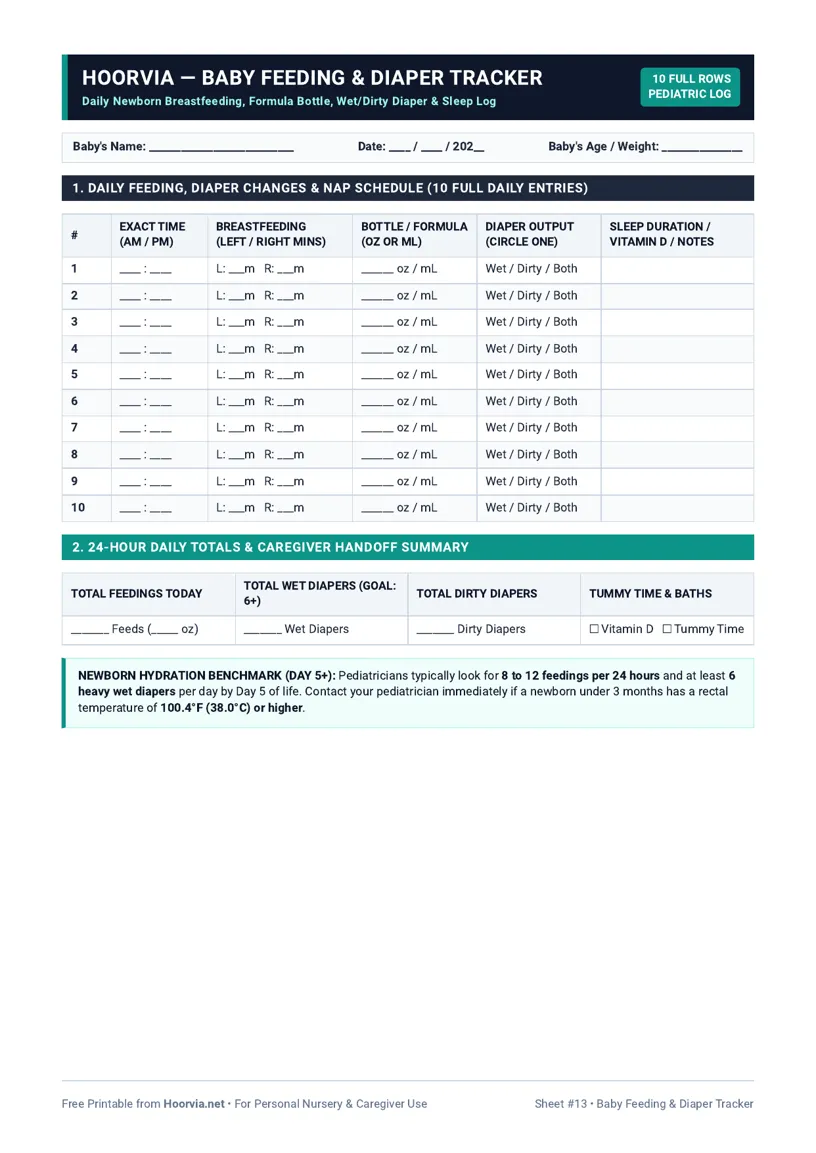
Download Your Free Printable Sheet
Download the printable PDF below. It is the same sheet shown in the preview above, ready to print on US Letter or A4 — open it and choose Print, with Scale set to Fit to Page.
💡 Pro Printing Tip: In your printer settings, set Scale to “Fit to Printable Area” and enable “Background Graphics” for color headers.
How to Print & Use This Chart
Print a stack on US Letter or A4 — one sheet per day in the early weeks — and keep the current sheet on the changing table or beside the feeding chair, with a pen attached. Use “Save as PDF” in the print dialog for a PDF copy, choosing Letter or A4 for your printer. A clipboard works well, because you will be filling this in one-handed at 3 a.m., and a loose sheet on a bed gets lost. If you prefer a reusable version, laminate one sheet and use a dry-erase marker, but keep paper copies for health-visitor or paediatrician visits, where a written record is easier to review.
Log each feed as soon as it finishes, noting the time, breast side or bottle amount, and tick the diaper boxes at each change. That simple habit answers the two questions tired parents ask most: “When did she last eat?” and “Which side was last?” It also helps a clinician spot problems early — for example, far fewer wet diapers than usual, or feeds that suddenly drop — because you have dates and times, not guesses. Do not use this tracker to restrict feeds to a rigid schedule: newborns feed on demand, and the guide numbers on the sheet are averages, not targets every baby must hit. If you are worried about feeding, weight gain, hydration or fewer wet diapers, contact your paediatrician or health visitor promptly rather than waiting for the next routine check. Store completed sheets privately; they are your baby’s health record.
Frequently Asked Questions (FAQs)
How often should a newborn feed?▼
Typically every 2–3 hours, 8–12 times in 24 hours, on demand. Every baby differs — follow your paediatrician’s guidance, not a rigid clock.
How many wet diapers are normal?▼
After the first few days, roughly 6 or more wet diapers per day is a common guide. Fewer than usual, especially with a dry mouth or lethargy, warrants prompt advice.
Should I wake a sleeping baby to feed?▼
In the early weeks, many clinicians advise waking for feeds if the baby sleeps very long stretches. Ask your paediatrician for your baby’s specific guidance.
Breast, bottle or both — does the tracker work for all?▼
Yes. Note breast side (L/R) or bottle amount in the same column, so anyone helping can follow the pattern.