Daily Water Intake Tracker Printable
A daily water intake tracker with 8-glass checkboxes, times, and a weight-based intake guide — print and tick as you drink.
Drinking enough water is simple in theory and easy to forget in a busy day. This tracker gives a weight-based starting guide and eight checkboxes to tick through the day, so you can see progress without an app, a subscription, or counting millilitres in your head.
Quick-Reference Table
The full data from this cheat sheet, right on the page.
| Body weight (approx.) | Daily water guide (approx.) | Glasses (250 ml) |
|---|---|---|
| 50 kg / 110 lb | 1.5–1.75 litres | 6–7 |
| 60 kg / 132 lb | 1.8–2.1 litres | 7–8 |
| 70 kg / 154 lb | 2.1–2.5 litres | 8–10 |
| 80 kg / 176 lb | 2.4–2.8 litres | 10–11 |
| 90 kg / 198 lb | 2.7–3.2 litres | 11–13 |
| 100 kg / 220 lb | 3.0–3.5 litres | 12–14 |
Printable Sheet Preview
High-Contrast Layout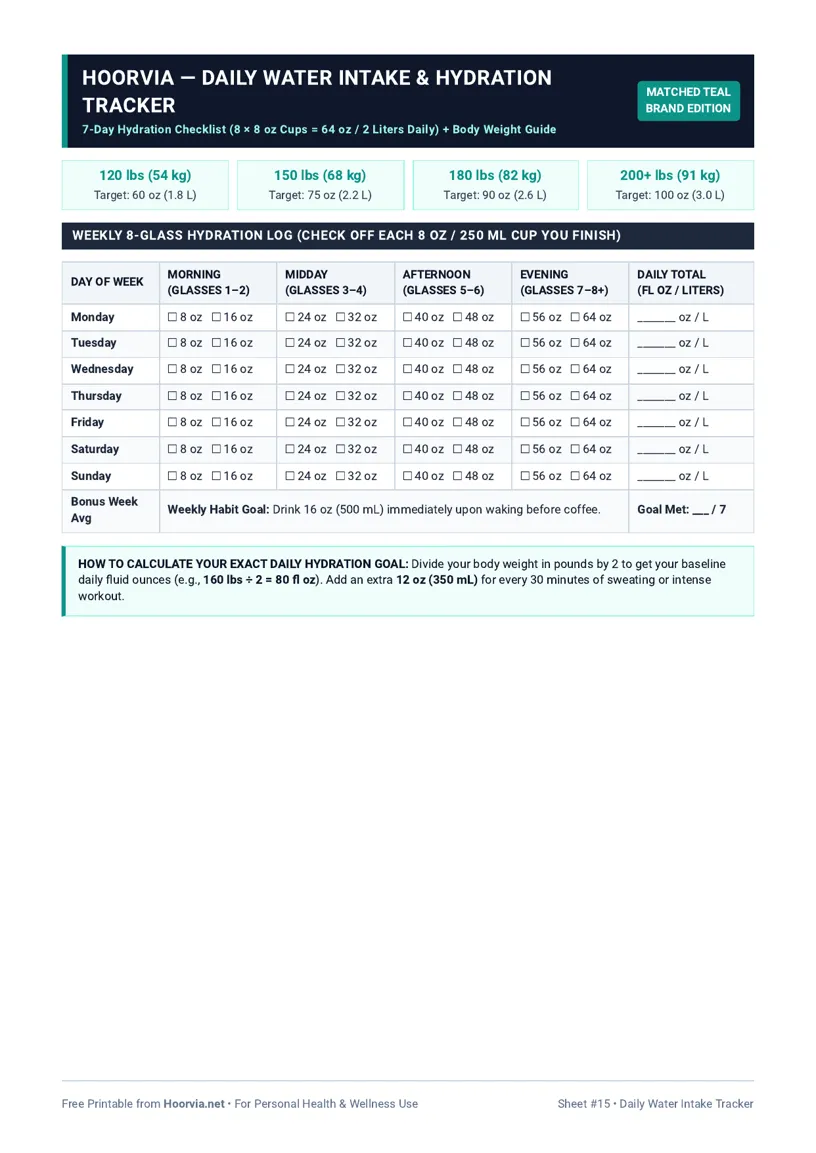
Download Your Free Printable Sheet
Download the printable PDF below. It is the same sheet shown in the preview above, ready to print on US Letter or A4 — open it and choose Print, with Scale set to Fit to Page.
💡 Pro Printing Tip: In your printer settings, set Scale to “Fit to Printable Area” and enable “Background Graphics” for color headers.
How to Print & Use This Chart
Print on US Letter or A4 and stick it on the fridge, beside your desk, or inside a planner — wherever you will actually see it during the day. Use “Save as PDF” in the print dialog for a PDF copy in Letter or A4. Laminate one copy and use a dry-erase marker if you want a reusable daily tracker, or print a week’s worth at once and keep them in a folder so a new day is always ready. The tracker works best when it is visible: a sheet buried in a drawer will not remind you to drink at 11 a.m. or 3 p.m., when most people fall behind.
Start the day with a glass, keep a bottle at your desk, and tick a box each time you finish a glass rather than trying to remember totals at night. Spread intake through the day — drinking a litre at 9 p.m. to “catch up” will disturb sleep and is not the same as steady hydration. Eat water-rich foods too: soups, fruit and vegetables all count toward fluid intake, even though this tracker counts glasses. You will need more in heat, during exercise, or when ill, and less if a clinician has advised fluid restriction for a medical condition — in that case, follow their guidance, not this general guide. If you have persistent thirst, very low urine output, dizziness, or a condition affecting kidneys, heart or blood sugar, discuss fluid intake with a clinician rather than pushing to a higher target on your own.
Frequently Asked Questions (FAQs)
How much water do I really need?▼
A common starting guide is 30–35 ml per kg of body weight per day, adjusted for heat, exercise and health. Use the table as a guide, not a strict rule.
Does coffee or tea count?▼
They contribute fluid, though water is best. Do not rely on sugary drinks for hydration.
Is 8 glasses a day correct for everyone?▼
No — needs vary by size, activity and climate. Eight 250 ml glasses is a handy average for many adults, but check your weight guide above.
Should I drink a lot at night to catch up?▼
No. Spread drinks through the day. A large amount late at night disrupts sleep and is not a substitute for steady intake.