Kitchen Measurement Conversions Chart
Cups to grams, tablespoons to millilitres, Fahrenheit to Celsius and ounces to grams — the conversion sheet for recipes from any country.
Recipes from the USA use cups, UK recipes mix metric and imperial, and baking is far more reliable by weight. This chart converts cups, tablespoons, ounces and temperatures so you can follow any recipe without a calculator, and it explains when to weigh instead of scooping.
Quick-Reference Table
The full data from this cheat sheet, right on the page.
| US Measure | Metric | Also equals |
|---|---|---|
| 1 tablespoon (tbsp) | 15 ml | 3 teaspoons |
| 1 teaspoon (tsp) | 5 ml | ⅓ tablespoon |
| ¼ cup | 60 ml | 4 tablespoons |
| ⅓ cup | 80 ml | 5 tbsp + 1 tsp |
| ½ cup | 120 ml | 8 tablespoons |
| 1 cup (liquid) | 240 ml | 16 tablespoons / 8 fl oz |
| 1 cup flour | 120 g (approx.) | Spoon and level — do not pack |
| 1 cup sugar (granulated) | 200 g (approx.) | — |
| 1 cup brown sugar (packed) | 220 g (approx.) | — |
| 1 cup butter | 227 g | 2 sticks / 8 oz |
| 1 oz (weight) | 28 g | — |
| 4 oz | 113 g | ¼ lb |
| 8 oz | 227 g | ½ lb |
| 16 oz | 454 g | 1 lb |
| 350°F oven | 177°C / Gas 4 | Common cake temperature |
| 375°F oven | 190°C / Gas 5 | — |
| 400°F oven | 200°C / Gas 6 | Roasting temperature |
| 425°F oven | 220°C / Gas 7 | — |
Printable Sheet Preview
High-Contrast Layout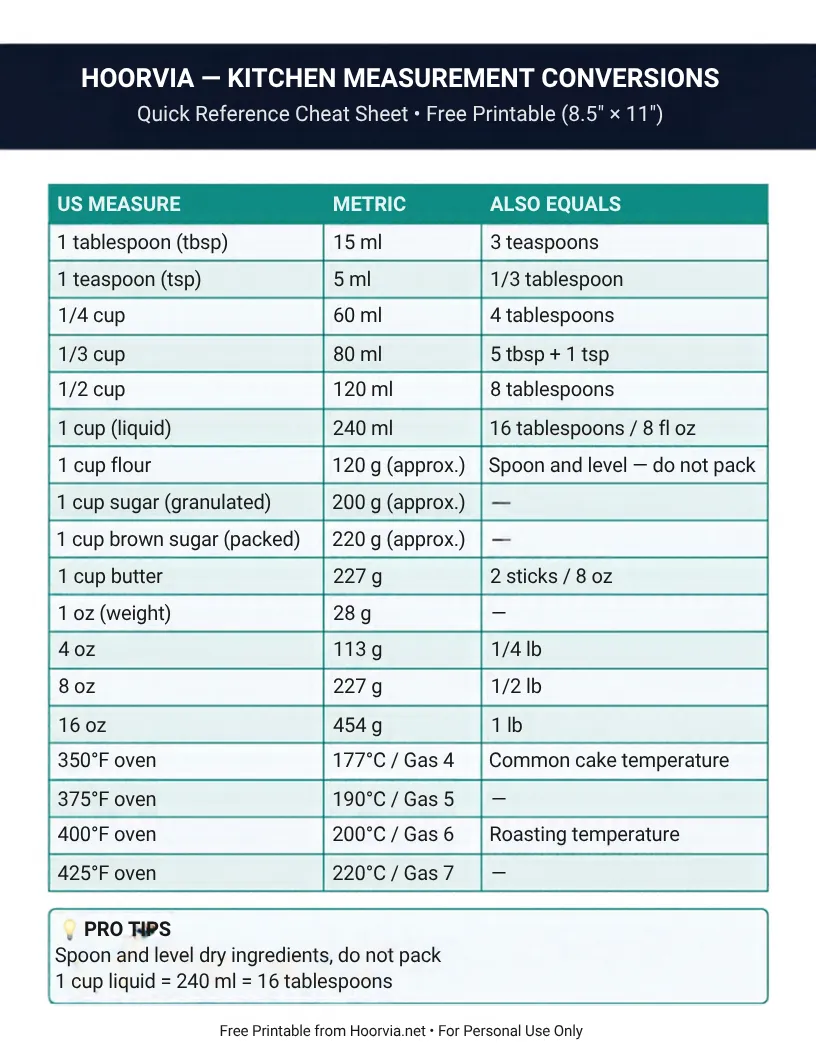
Download Your Free Printable Sheet
Download the printable PDF below. It is the same sheet shown in the preview above, ready to print on US Letter or A4 — open it and choose Print, with Scale set to Fit to Page.
💡 Pro Printing Tip: In your printer settings, set Scale to “Fit to Printable Area” and enable “Background Graphics” for color headers.
How to Print & Use This Chart
Print this conversion sheet on US Letter or A4 and fix it where you measure — inside a cupboard door above the counter, on the fridge, or in the front of a recipe binder. In the print dialog, choose “Save as PDF” for a digital copy and set Letter or A4 to match your paper. A laminated copy is ideal because measuring cups, flour dust and wet hands are a constant threat to paper, and this is the sheet you will reach for most often when a recipe comes from another country. If you print it small enough to fit a binder, keep the font readable; a tiny chart you cannot read at arm’s length will not get used.
For everyday cooking, volume conversions are fine, but for baking, weigh flour, sugar and butter on a scale and use the gram column — it removes the biggest source of inconsistent cakes. Remember that a US cup (240 ml) is not the same as a metric cup (250 ml) in some countries, which is why this chart states 240 ml explicitly. When converting oven temperatures, note that fan/convection ovens usually run 25°F / 15°C lower than the stated conventional temperature, so reduce the setting if your oven has a fan mode. Keep a pencil nearby and jot down the weight of your most-used ingredients in your own handwriting; after a month, the chart plus your notes will cover almost every recipe you cook.
Frequently Asked Questions (FAQs)
Is a US cup the same as a metric cup?▼
No. A US cup is 240 ml; a metric cup used in Australia and some other countries is 250 ml. The difference matters in baking.
Why do flour grams vary?▼
Flour settles and packs differently. Spoon it into the cup and level it, or better, weigh it. 120 g per cup is a standard approximation.
Should I use volume or weight for baking?▼
Weight, whenever the recipe gives grams. It is faster, more accurate, and means fewer cups to wash.
What about oven temperatures for fan ovens?▼
Reduce a conventional temperature by about 25°F / 15°C for a fan/convection oven, and check food a few minutes early.