Meat Internal Temperature Chart
USDA safe minimum internal temperatures for beef, pork, lamb, poultry and fish, with rest times — the chart every kitchen needs.
Guessing meat doneness is how food poisoning and dry roasts happen. This chart lists USDA safe minimum internal temperatures, measured in the thickest part away from bone, plus the rest time that lets heat spread and juices settle. A $10 thermometer is more reliable than colour or touch alone.
Quick-Reference Table
The full data from this cheat sheet, right on the page.
| Meat | Safe Minimum | Rest | Notes |
|---|---|---|---|
| Beef steak / roast | 145°F / 63°C | 3 min | Medium-rare is a preference above this minimum, not below it |
| Lamb steak / roast | 145°F / 63°C | 3 min | Same minimum as beef |
| Pork chops / roast / tenderloin | 145°F / 63°C | 3 min | A little pink at 145°F is safe after resting |
| Ground beef / pork / lamb | 160°F / 71°C | — | Grinding mixes surface bacteria through the meat |
| Ground turkey / chicken | 165°F / 74°C | — | Check several spots |
| Chicken breast / thigh | 165°F / 74°C | — | Thickest part, away from bone |
| Whole chicken / turkey | 165°F / 74°C | 15–20 min | Check inner thigh and breast |
| Duck breast | 165°F / 74°C | 5 min | Follow poultry guidance for safety |
| Fish fillet / steak | 145°F / 63°C | — | Or until flesh flakes easily |
| Shrimp / lobster / crab | 145°F / 63°C | — | Flesh pearly and opaque |
| Ham (pre-cooked, reheat) | 140°F / 60°C | — | Fresh ham: cook to 145°F + 3 min rest |
| Leftovers / casseroles | 165°F / 74°C | — | Reheat until steaming throughout |
Printable Sheet Preview
High-Contrast Layout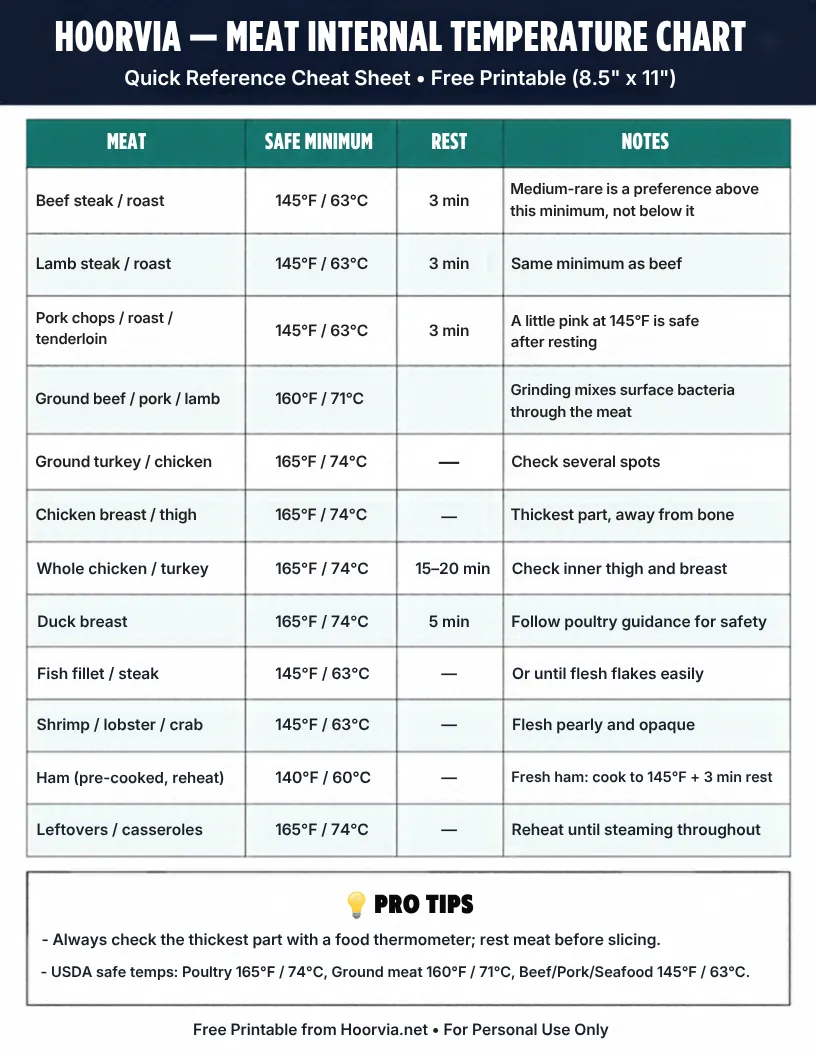
Download Your Free Printable Sheet
Download the printable PDF below. It is the same sheet shown in the preview above, ready to print on US Letter or A4 — open it and choose Print, with Scale set to Fit to Page.
💡 Pro Printing Tip: In your printer settings, set Scale to “Fit to Printable Area” and enable “Background Graphics” for color headers.
How to Print & Use This Chart
Print this chart on US Letter or A4 and put it where you actually cook — on the fridge, inside a spice cupboard, or beside the grill. Use the browser print dialog and choose “Save as PDF” if you want a digital copy, selecting Letter for North America or A4 for the UK. Because this chart lives near heat, steam and raw-meat hands, laminate it or slip it into a clear plastic sleeve; you can then wipe it clean and it will last through many barbecues and roast dinners. A faded, stained chart nobody can read is worse than no chart, so replace it when the numbers get hard to see.
Use an instant-read thermometer inserted into the thickest part, away from bone, fat and the pan, and wait a few seconds for a stable reading. For burgers and sausages, check more than one piece because grills have hot spots. Rest steaks, chops and roasts for at least 3 minutes — the temperature rises slightly and juices redistribute, so cutting immediately makes meat dry. For whole poultry, check both the inner thigh and the thickest breast, and do not rely on pop-up timers alone. If you are cooking for pregnant people, young children, older adults or anyone immunocompromised, stick strictly to these minimums and reheat leftovers to 165°F / 74°C. This chart is a safety summary, not a substitute for full food-safety guidance.
Frequently Asked Questions (FAQs)
Is pink pork safe at 145°F?▼
Yes, if it reached 145°F / 63°C in the thickest part and rested 3 minutes. Pink colour alone does not mean undercooked — temperature is the test.
Why is ground beef 160°F but steak only 145°F?▼
Grinding spreads surface bacteria throughout the meat, so the centre must reach a higher temperature. A whole steak only needs its surface and interior to reach 145°F.
Do I really need a thermometer?▼
For safety, yes. Colour, juices and firmness are unreliable, especially for poultry and burgers.
What temperature for leftovers?▼
Reheat leftovers and casseroles to 165°F / 74°C until steaming throughout, and refrigerate within 2 hours of cooking.