Medication Schedule Chart: Printable Daily Dose Tracker
Missing a single dose is the most common way medication fails — not the drug itself. Most people juggle pills by memory: a thyroid pill before breakfast, a statin at night, a vitamin somewhere around lunch. That guesswork collapses the moment a schedule changes, a new prescription joins the list, or a travel day scrambles your routine. A written medication schedule removes the guesswork entirely: one page that says what to take, when, and with what, so you never double-dose or skip by accident. This printable medication schedule chart pairs common medication timing patterns with practical rules — which drugs need an empty stomach, which pair with meals, and which belong at bedtime — so you can build a routine that actually sticks. Consult the live reference table below to plan your day's doses, then print the sheet below and keep it where you take your meds.
Quick-Reference Table
The full data from this cheat sheet, right on the page.
| Medication Example | Usual Timing | Food Guidance | Scheduling Tip |
|---|---|---|---|
| Multivitamin | Morning with breakfast | With food | Fat-soluble vitamins (A, D, E, K) absorb better with a meal |
| Iron supplement | Morning, 1 hour before food | Empty stomach | Vitamin C boosts absorption; keep away from coffee and calcium |
| Calcium supplement | Evening or split doses | With food | Absorbs about 500 mg at a time; never take together with iron |
| Short-acting statin (e.g. simvastatin) | Evening or bedtime | Either | Cholesterol synthesis peaks overnight, so evening dosing works best |
| Blood pressure medication | Same time daily, usually morning | Either | Consistency matters more than the exact hour |
| Levothyroxine (thyroid) | 30-60 min before breakfast | Empty stomach | Take alone; coffee, calcium, and iron block absorption |
| Metformin (diabetes) | With meals | With food | Food cuts stomach upset; match doses to your meals |
| Antibiotics (e.g. amoxicillin) | Evenly spaced, every 8-12 hours | Either | Finish the full course; set alarms for overnight doses |
| Drowsy antihistamine | Evening or bedtime | Either | Works best at night, when sleepiness is a feature |
| Probiotic | With or just after a meal | With food | Food buffers stomach acid so more bacteria survive |
| Fish oil / omega-3 | With a fat-containing meal | With food | Taking it at dinner reduces fishy aftertaste |
| Melatonin | 30-60 min before bed | Empty stomach is fine | Best for short-term sleep resets, not as a nightly habit |
How to Use This Chart
Pin this chart where you work: it packs 12 entries and 4 columns (Medication Example, Usual Timing, Food Guidance, Scheduling Tip) into one printable page, built for quick lookups.
Scan down the Medication Example column to your item, then read across for Usual Timing, Food Guidance, Scheduling Tip.
Example: for Multivitamin, the chart gives Usual Timing of Morning with breakfast.
- Compare values down a single column to spot the pattern before you commit to a choice.
- When two rows look close, the last column usually breaks the tie.
- Print it once and keep it where you work — that's the whole point of a cheat sheet.
💡 Quick Tips
Anchor Doses to Meals: Tie each dose to breakfast, lunch, or dinner so the routine runs on autopilot.
Set One Alarm Per Dose Time: A phone alarm beats memory — especially for twice-daily or middle-of-the-night doses.
Write Down Refill Dates: Note each refill date on the chart; pharmacies usually need three to five days' lead time.
Frequently Asked Questions
What should a medication schedule include?
Every row needs the medication name, dose strength, exact times, and food guidance. Add the prescribing doctor's phone number and each refill date at the top. That turns the chart into a complete handoff document for caregivers and pharmacists.
Should I take my medication with food?
It depends on the drug. Some absorb best on an empty stomach, while others need food to prevent nausea. Check the pharmacy label or ask your pharmacist — never switch on a guess, because food can cut some drugs' absorption in half.
How do I remember to take medication on time?
Anchor doses to meals, set a phone alarm for each dosing time, and use a weekly pill organizer. Keep the printed chart where you take your meds — a visible list beats memory, especially when a routine gets interrupted by travel or illness.
Printable Sheet Preview
High-Contrast Layout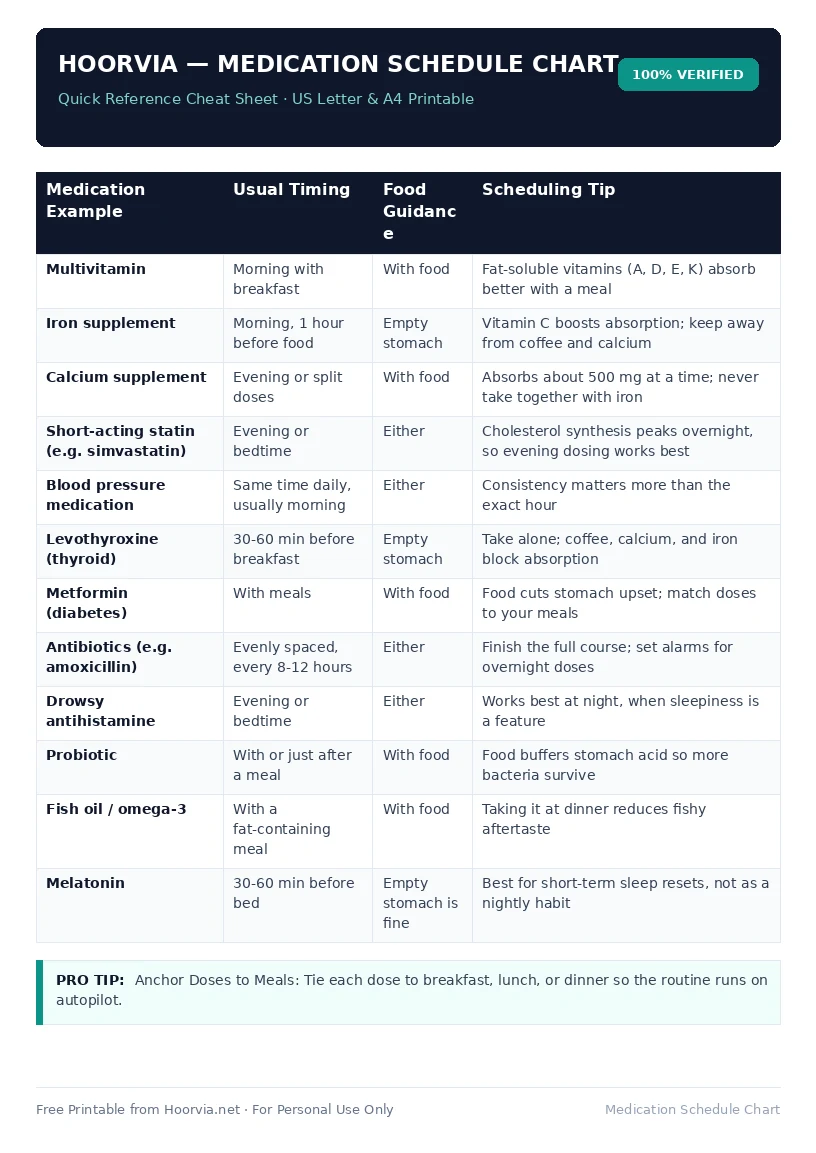
Download Your Free Printable Sheet
Download the printable PDF below. It is the same sheet shown in the preview above, ready to print on US Letter or A4 — open it and choose Print, with Scale set to Fit to Page.
💡 Pro Printing Tip: In your printer settings, set Scale to “Fit to Printable Area” and enable “Background Graphics” for color headers.