Milk Measurement Conversion & Substitution Chart: Printable Kitchen Reference
Baking with milk gets confusing fast when a recipe calls for milliliters, your measuring cup shows ounces, and all you have is 2% instead of whole. Because milk appears in everything from pancakes and béchamel to custards and bread dough, keeping conversions and substitutions straight saves both ingredients and frustration. This printable milk measurement conversion chart puts every essential equivalent on one page: exact cup-to-milliliter-to-ounce conversions, a reliable buttermilk substitute you can mix in five minutes, fat percentages for whole through skim milk, the scalding temperature for custards and yogurt, and safe storage rules. Pin the table below next to your recipe while cooking, or print the sheet below to tape inside your pantry door for instant answers.
Quick-Reference Table
The full data from this cheat sheet, right on the page.
| Measurement / Type | Equals | Metric | Kitchen Use |
|---|---|---|---|
| 1 cup milk | 8 fl oz | 240 ml | Standard baking measure |
| 1/2 cup milk | 4 fl oz | 120 ml | Half-batch recipes |
| 1/4 cup milk | 2 fl oz | 60 ml | Sauces and small batches |
| 1 tablespoon | 0.5 fl oz | 15 ml | Coffee, small additions |
| Buttermilk substitute | 1 cup milk + 1 tbsp lemon juice or vinegar | Rest 5 minutes | Pancakes, biscuits, fried chicken |
| Whole milk | 3.25% milkfat | — | Richest flavor; best for baking |
| 2% reduced-fat milk | 2% milkfat | — | Everyday drinking and cereal |
| 1% low-fat milk | 1% milkfat | — | Lighter cooking and drinking |
| Skim / fat-free milk | Less than 0.5% milkfat | — | Lowest calorie option |
| Scald point | 180°F | 82°C | Heat until steaming, not boiling (yogurt, custards) |
| Safe storage | At or below 40°F | At or below 4°C | Refrigerate; use within 5–7 days of opening |
| Powdered milk | 1/3 cup powder + 3/4 cup water | = about 1 cup milk | Emergency baking substitute |
How to Use This Chart
Pin this chart where you work: it packs 12 entries and 4 columns (Measurement / Type, Equals, Metric, Kitchen Use) into one printable page, built for quick lookups.
Scan down the Measurement / Type column to your item, then read across for Equals, Metric.
Example: for 1 cup milk, the chart gives Equals of 8 fl oz.
- Compare values down a single column to spot the pattern before you commit to a choice.
- When two rows look close, the Kitchen Use column usually breaks the tie.
- Print it once and keep it where you work — that's the whole point of a cheat sheet.
💡 Quick Tips
Sour Milk Rescue: If milk smells slightly sour but is not curdled, it is still fine for baking — heat kills the bacteria and the acid actually tenderizes pancakes, muffins, and quick breads.
Never Boil: Boiled milk scorches, forms skin, and tastes burnt. Heat gently to 180°F for scalding, stirring often, and remove it the moment tiny bubbles rim the edges.
Frequently Asked Questions
Can I substitute 2% milk for whole milk in baking?▼
Yes, in most recipes. Whole milk adds richness and tenderness, but 2% works fine for cakes, muffins, and breads. For custards, pastry cream, and ganache, stick with whole milk because the extra fat sets the texture properly.
How do I make buttermilk if I only have regular milk?▼
Pour 1 tablespoon of lemon juice or white vinegar into a measuring cup, then add milk up to the 1-cup line. Stir and rest for 5 minutes until slightly thickened. This acidified milk reacts with baking soda exactly like cultured buttermilk.
How long does opened milk last in the fridge?▼
Opened milk stays fresh 5 to 7 days when kept at or below 40°F and sealed tightly. Keep it on a middle shelf, not the door, where temperatures swing. Freeze unopened milk up to 3 months; thaw in the fridge and shake before using.
Printable Sheet Preview
High-Contrast Layout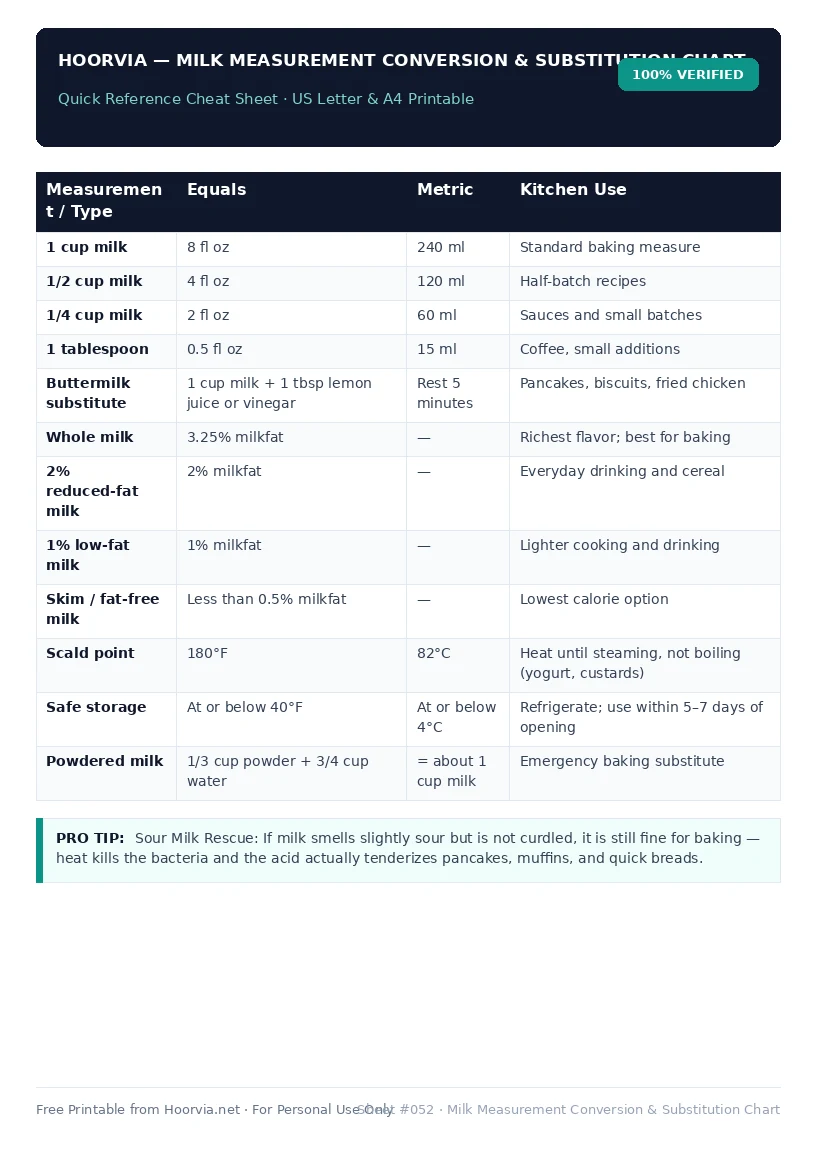
Download Your Free Printable Sheet
Download the printable PDF below. It is the same sheet shown in the preview above, ready to print on US Letter or A4 — open it and choose Print, with Scale set to Fit to Page.
💡 Pro Printing Tip: In your printer settings, set Scale to “Fit to Printable Area” and enable “Background Graphics” for color headers.