Poultry Cooking Times Chart: Printable Temperature & Roasting Guide
Poultry is unforgiving — undercook it and you risk foodborne illness, overcook it and breast meat turns to sawdust. The safe internal temperature for all poultry is a single, simple number: 165°F, no exceptions from the USDA. But reaching it with juicy results depends on matching each cut to the right oven temperature and time per pound, because a whole turkey and a boneless breast behave nothing alike. This printable poultry cooking times chart covers twelve cuts, from weeknight chicken thighs to the holiday turkey, with exact oven temperatures, cook times, and pull temperatures. Check the table below while the oven preheats, or print the sheet below to keep near your roasting pan for confident, safe poultry every time.
Quick-Reference Table
The full data from this cheat sheet, right on the page.
| Poultry Cut | Typical Weight | Oven Temp | Cook Time | Safe Internal Temp |
|---|---|---|---|---|
| Whole Chicken | 4–5 lbs | 375°F | 20 min/lb (80–100 min) | 165°F |
| Chicken Breast (boneless) | 6–8 oz each | 375°F | 20–25 min | 165°F |
| Chicken Thighs (bone-in) | 5–7 oz each | 375°F | 35–45 min | 165°F |
| Chicken Legs / Drumsticks | 4–6 oz each | 400°F | 35–40 min | 165°F |
| Chicken Wings | — | 425°F | 40–45 min | 165°F |
| Ground Chicken / Turkey | 1 lb | Stovetop / 375°F | 8–10 min (break apart) | 165°F |
| Whole Turkey | 12–16 lbs | 325°F | 13–15 min/lb | 165°F |
| Turkey Breast (bone-in) | 5–7 lbs | 325°F | 20–25 min/lb | 165°F |
| Turkey Legs | 1–1.5 lbs each | 325°F | 90–105 min | 165°F |
| Whole Duck | 5–6 lbs | 350°F | 18–20 min/lb | 165°F |
| Duck Breast | 8–10 oz each | Stovetop 450°F finish | 6–8 min skin-down | 135°F (med-rare) |
| Cornish Hens | 1–1.5 lbs each | 400°F | 50–60 min | 165°F |
How to Use This Chart
Pin this chart where you work: it packs 12 entries and 5 columns (Poultry Cut, Typical Weight, Oven Temp, Cook Time, Safe Internal Temp) into one printable page, built for quick lookups.
Scan down the Poultry Cut column to your item, then read across for Typical Weight, Oven Temp, Cook Time, Safe Internal Temp.
Example: for Whole Chicken, the chart gives Typical Weight of 4–5 lbs.
- Compare values down a single column to spot the pattern before you commit to a choice.
- When two rows look close, the last column usually breaks the tie.
- Print it once and keep it where you work — that's the whole point of a cheat sheet.
💡 Quick Tips
Temp, Not Time: Oven times are estimates — thickness and starting temperature change everything. A $15 instant-read thermometer is the only reliable way to confirm 165°F.
Pull Breasts Early: Carryover heat adds 3–5°F while resting. Pull chicken breasts at 160°F and let them coast to 165°F under a foil tent.
Dry Skin Crisps: Pat poultry dry and salt it uncovered in the fridge. Dry skin crisps in a hot oven; wet skin steams no matter the temperature.
Frequently Asked Questions
Is chicken safe at 155°F instead of 165°F?
The USDA's instant-kill temperature is 165°F, which is safe to read on sight. Pasteurization also happens at 155°F if that temperature is held for about 55 seconds — but an instant-read thermometer can't easily confirm the hold, so 165°F stays the practical home rule.
Why are my chicken breasts always dry?
Breasts are lean and go from perfect to dry in minutes. Cook to 165°F maximum, let carryover heat do the last few degrees, and rest 5 minutes before slicing so juices redistribute instead of flooding the board.
Can I cook chicken from frozen?
Yes — it is safe, just add about 50% more cook time and check the temperature carefully. It works for breasts, thighs, and ground poultry. Never cook a whole frozen bird in a slow cooker, where it lingers in the danger zone.
Printable Sheet Preview
High-Contrast Layout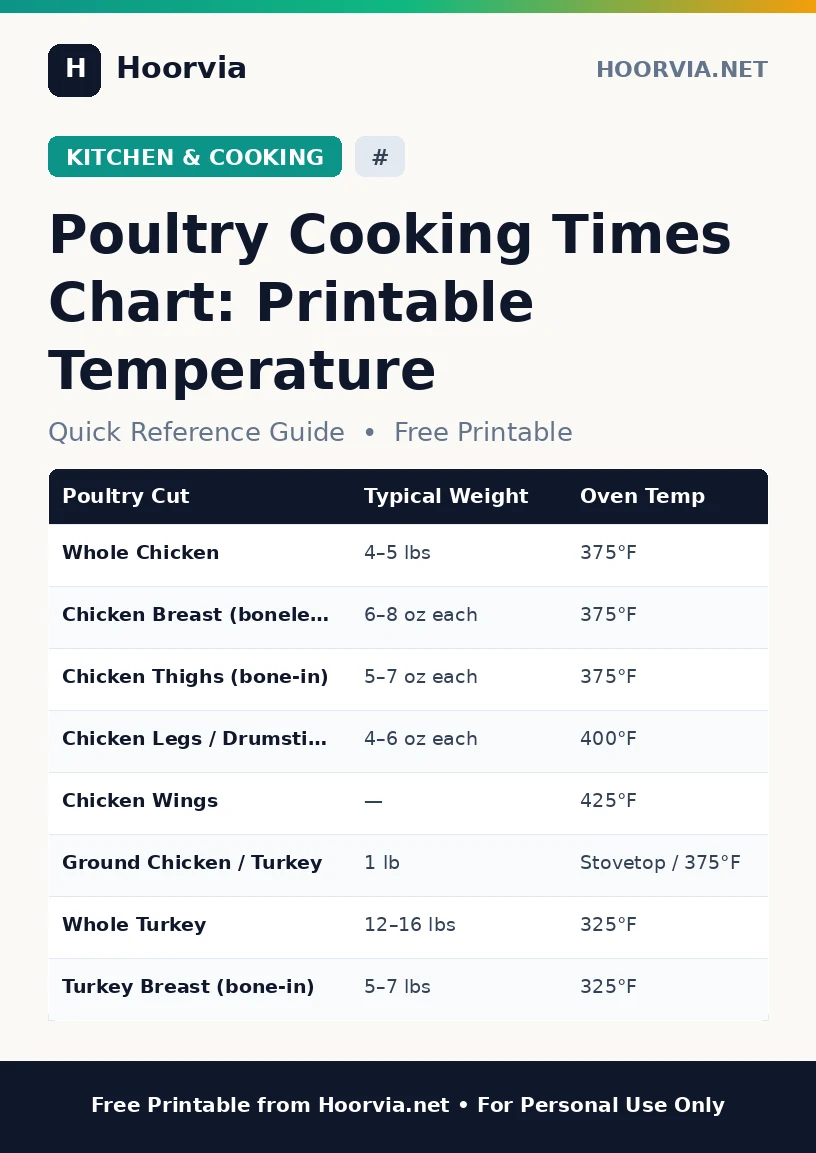
Download Your Free Printable Sheet
Download the printable PDF below. It is the same sheet shown in the preview above, ready to print on US Letter or A4 — open it and choose Print, with Scale set to Fit to Page.
💡 Pro Printing Tip: In your printer settings, set Scale to “Fit to Printable Area” and enable “Background Graphics” for color headers.