Rice to Water Ratio Chart: Printable Guide for Every Rice Type
Every rice variety drinks a different amount of water, which is why one universal ratio produces mushy jasmine and crunchy brown rice in the same week. Because grain length, bran layers, and starch content all change absorption, guessing the ratio is the number one cause of disappointing rice. This printable rice to water ratio chart lists exact rice-to-water ratios, stovetop cook times, and expected yields for eleven common rice types — from everyday long-grain white to nutty wild rice and sticky sushi rice. Use the table below to measure with confidence tonight, or print the sheet below to tape inside your spice cabinet for perfect rice every time.
Quick-Reference Table
The full data from this cheat sheet, right on the page.
| Rice Type | Rice : Water Ratio | Cook Time | Yield & Notes |
|---|---|---|---|
| White long-grain | 1 : 2 | 18 minutes | 3 cups cooked; fluffy, separate grains |
| Basmati | 1 : 1.5 | 15 min + 10 min rest | 3 cups; rinse first, aromatic |
| Jasmine | 1 : 1.25 | 15 minutes | 3 cups; slightly sticky, fragrant |
| Sushi / short-grain | 1 : 1.2 | 15 min + 10 min rest | 3 cups; sticky for rolling |
| Brown long-grain | 1 : 2.5 | 45 minutes | 3–4 cups; chewy and nutty |
| Brown basmati | 1 : 2 | 35–40 minutes | 3 cups; lighter than regular brown |
| Wild rice | 1 : 3 | 45–55 minutes | 3–4 cups; grains split when done |
| Arborio (risotto) | 1 : 3 to 4 | 20 min, stirring | 3 cups; creamy — add broth gradually |
| Parboiled / converted | 1 : 2.25 | 20–25 minutes | 3–4 cups; firm, separate grains |
| Black / forbidden rice | 1 : 2 | 30–35 minutes | 3 cups; deep color, chewy bite |
| Rice cooker (white) | 1 : 1 | Automatic | Use cooker cup; less evaporation than stovetop |
How to Use This Chart
Pin this chart where you work: it packs 11 entries and 4 columns (Rice Type, Rice : Water Ratio, Cook Time, Yield & Notes) into one printable page, built for quick lookups.
Scan down the Rice Type column to your item, then read across for Rice : Water Ratio, Cook Time.
Example: for White long-grain, the chart gives Rice : Water Ratio of 1 : 2.
- Compare values down a single column to spot the pattern before you commit to a choice.
- When two rows look close, the Yield & Notes column usually breaks the tie.
- Print it once and keep it where you work — that's the whole point of a cheat sheet.
💡 Quick Tips
Rest Is Non-Negotiable: Always rest rice 10 minutes off the heat with the lid on. Resting lets moisture redistribute so the bottom is not wet and the top is not dry — then fluff with a fork, never a spoon.
Rinse Until Clear: Rinse basmati, jasmine, and sushi rice in cold water until it runs mostly clear. This removes surface starch that causes gumminess and lets each variety cook to its proper texture.
Frequently Asked Questions
Why is my rice always mushy?▼
Too much water is the usual cause. Measure with the same cup for rice and water, match the ratio to your exact rice type from the chart, and keep the lid on — lifting it releases steam the rice needs. Resting 10 minutes before fluffing also prevents mushiness.
Can I cook brown rice like white rice?▼
No — brown rice keeps its bran layer, so it needs more water (1:2.5) and much longer (45 minutes). Cooking it like white rice leaves the center hard. Brown basmati is a good middle ground at 35–40 minutes.
Do I need different ratios for a rice cooker?▼
Yes, slightly less water. Rice cookers trap steam efficiently, so white rice needs only a 1:1 ratio with the cooker's measuring cup instead of the stovetop 1:2. Brown rice in a cooker still needs about 1:2.
Printable Sheet Preview
High-Contrast Layout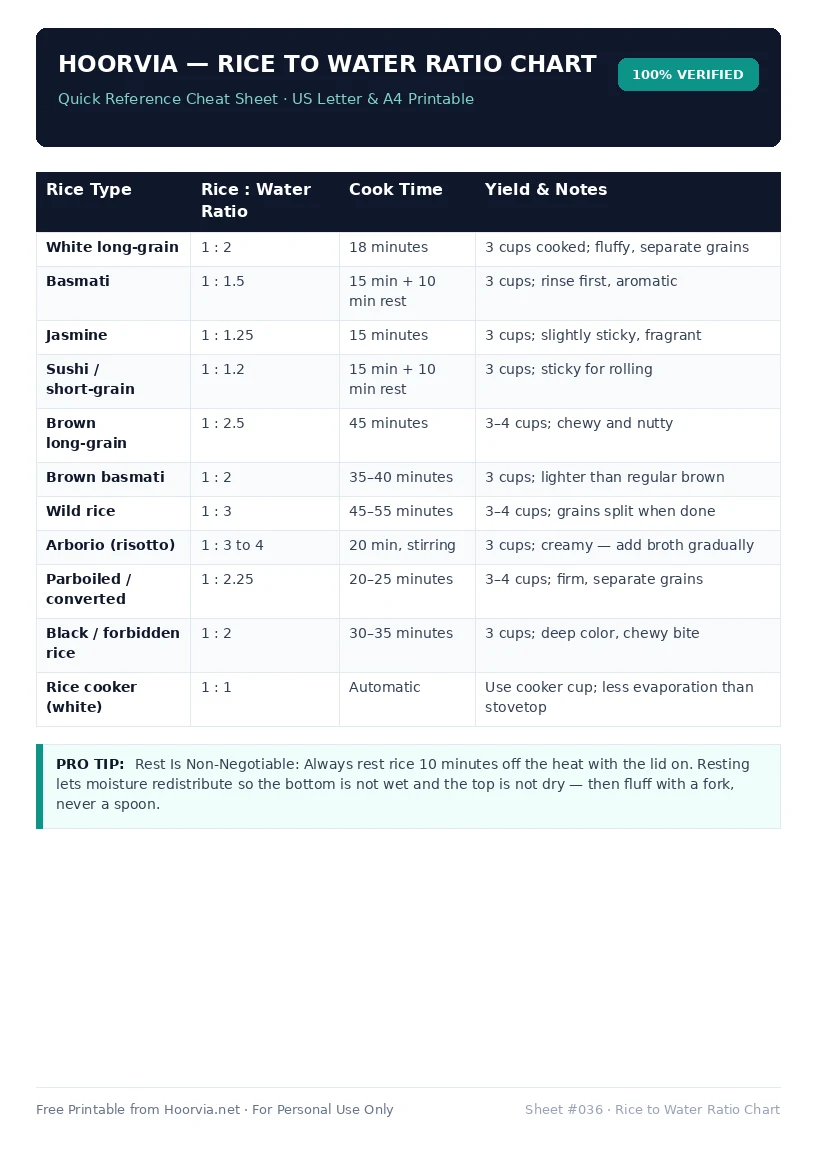
Download Your Free Printable Sheet
Download the printable PDF below. It is the same sheet shown in the preview above, ready to print on US Letter or A4 — open it and choose Print, with Scale set to Fit to Page.
💡 Pro Printing Tip: In your printer settings, set Scale to “Fit to Printable Area” and enable “Background Graphics” for color headers.