Seafood Cooking Time & Temperature Chart: Printable Fish & Shellfish Guide
Seafood goes from perfect to ruined in under a minute, which is why even experienced cooks second-guess shrimp timing and salmon doneness. Because different species vary wildly in thickness, fat content, and structure, a single rule never fits all — delicate scallops need a hard sear while dense lobster tails need gentle oven heat. This printable seafood cooking time and temperature chart covers twelve popular fish and shellfish with exact cook times, oven temperatures, and target internal temperatures, plus visual doneness cues for shellfish where thermometers cannot reach. Check the table below before your fish hits the heat, or print the sheet below to keep by the stove for weeknight dinners and dinner parties alike.
Quick-Reference Table
The full data from this cheat sheet, right on the page.
| Seafood | Thickness / Size | Cook Time | Internal Temp & Doneness |
|---|---|---|---|
| Salmon fillet | 1 inch thick | 10 min per inch at 425°F | 125–130°F medium-rare; 145°F FDA safe |
| Tuna steak | 1 inch thick | 2–3 min per side, hard sear | 115–125°F rare center |
| Cod / white fish | 1 inch thick | 10–12 min at 400°F | 145°F; flesh flakes easily |
| Halibut steak | 1 inch thick | 10–12 min at 400°F | 135–140°F; moist and just opaque |
| Shrimp (large) | 16–20 count | 2–3 min per side | Pink and C-shaped (tight O = overcooked) |
| Sea scallops | U-10 size | 2–3 min per side, sear | Golden crust, translucent center |
| Lobster tail | 6–8 oz | 12–15 min at 425°F | 140–145°F; meat opaque white |
| King crab legs | Thawed | 6–8 min steaming | Heated through (sold pre-cooked) |
| Mussels | Fresh, debearded | 5–7 min covered steam | Shells open; discard any that stay closed |
| Littleneck clams | Fresh | 7–10 min covered steam | Shells open wide; discard closed ones |
| Oysters (baked) | On half shell | 10 min at 450°F | Edges curl and liquor bubbles |
| Calamari rings | Fresh | 2–3 min fry or 30+ min braise | Tender; anything between = rubbery |
How to Use This Chart
Pin this chart where you work: it packs 12 entries and 4 columns (Seafood, Thickness / Size, Cook Time, Internal Temp & Doneness) into one printable page, built for quick lookups.
Scan down the Seafood column to your item, then read across for Thickness / Size, Cook Time.
Example: for Salmon fillet, the chart gives Thickness / Size of 1 inch thick.
- Compare values down a single column to spot the pattern before you commit to a choice.
- When two rows look close, the Internal Temp & Doneness column usually breaks the tie.
- Print it once and keep it where you work — that's the whole point of a cheat sheet.
💡 Quick Tips
The 10-Minute Rule: Measure fish at its thickest point and cook about 10 minutes per inch of thickness at 400–450°F. This classic rule works for nearly every finfish fillet and steak.
Carryover Matters: Fish keeps cooking off the heat. Pull salmon and halibut 5°F below your target temperature and rest 3 minutes — the center will coast up while staying silky.
Frequently Asked Questions
What is the safe internal temperature for fish?▼
The FDA recommends 145°F for finfish, measured at the thickest part. Many chefs prefer salmon at 125–130°F for a silky medium-rare texture, which is a quality choice rather than a safety rule for high-quality, fresh fish.
How do I know shrimp are done without a thermometer?▼
Watch the shape and color. Raw shrimp are gray and straight; perfectly cooked shrimp turn pink with white flesh and curl into a loose C shape. A tight O shape means they are overcooked and will be rubbery.
Should I discard mussels or clams that do not open?▼
Yes. Shellfish that stay tightly closed after full cooking time were likely dead before cooking and may be unsafe. Discard them. Also discard any with cracked shells or a foul smell before cooking.
Printable Sheet Preview
High-Contrast Layout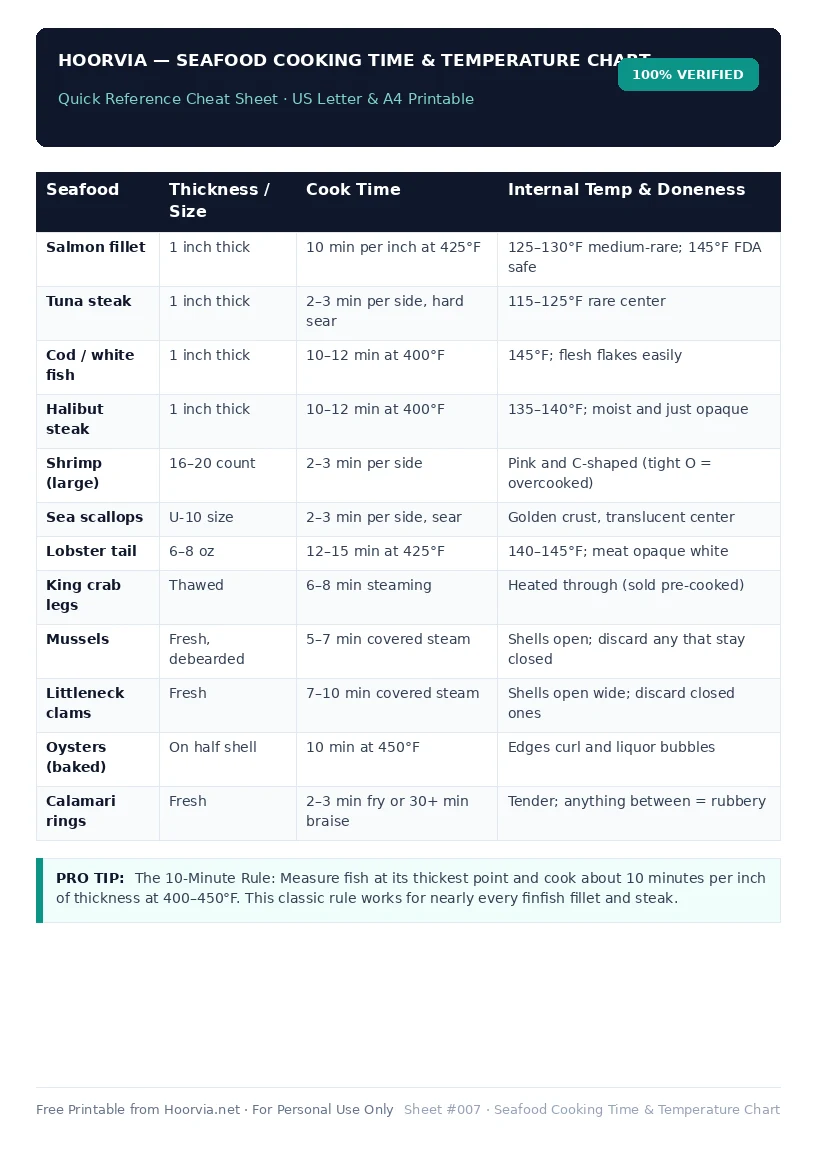
Download Your Free Printable Sheet
Download the printable PDF below. It is the same sheet shown in the preview above, ready to print on US Letter or A4 — open it and choose Print, with Scale set to Fit to Page.
💡 Pro Printing Tip: In your printer settings, set Scale to “Fit to Printable Area” and enable “Background Graphics” for color headers.