Steak Doneness Temperature Chart: Printable Internal Temp & Resting Guide
Getting steak house accuracy on your grill or cast-iron skillet comes down to internal temperature, not guesswork or poking the meat. Because residual heat continues cooking beef after it leaves the heat source—a process known as carryover cooking—knowing both your exact pull temperature and final target temperature is essential. This printable steak doneness temperature chart gives you a clear, kitchen-ready reference for every level from blue rare to well done, plus specialized targets for high-fat Wagyu, lean bison, and safe USDA cooking thresholds. Whether you are reverse-searing a thick ribeye, pan-basting a tenderloin filet, or smoking a tri-tip roast, keeping this beef doneness internal temperature chart by your prep station prevents overcooking expensive cuts. Consult the table below for immediate temperature readings or print the high-contrast sheet below to tape inside your pantry door.
The full data from this cheat sheet, right on the page.
Quick-Reference Table
The full data from this cheat sheet, right on the page.
| Doneness Level | Pull Temp (°F) | Final Target Temp (°F / °C) | Center Color & Texture | Best Cuts for This Level |
|---|---|---|---|---|
| Blue Rare (Extra Rare) | 110°F | 115°F / 46°C | Deep purple-red; cool, raw-like soft center | Filet Mignon, Chateaubriand |
| Rare | 120°F | 125°F / 52°C | Bright red center; warm, soft, very juicy | Tenderloin, Top Sirloin, Flank |
| Medium-Rare (Chef Standard) | 130°F | 135°F / 57°C | Warm red center; tender with melted fat | New York Strip, Porterhouse, T-Bone |
| Medium-Rare Plus (Ribeye Sweet Spot) | 133°F | 138°F / 59°C | Red-pink center; rich intramuscular fat fully rendered | Bone-in Ribeye, Tomahawk, Cowboy Cut |
| Medium | 140°F | 145°F / 63°C | Hot pink center; firmer bite, moderate juice | Sirloin Cap (Picanha), Skirt Steak |
| Medium-Well | 150°F | 155°F / 68°C | Thin sliver of pink; firm texture, less moisture | Hanger Steak, Flat Iron, Cube Steak |
| Well Done | 155°F+ | 160°F+ / 71°C+ | Brown throughout; firm and dense chew | Thin Diner Steaks, Braised Chuck |
| USDA Safe Minimum (Whole Beef) | 140°F | 145°F / 63°C | Pink center; requires a mandatory 3-minute rest | All whole-muscle beef steaks and roasts |
| Ground Beef / Burger Patties | 155°F | 160°F / 71°C | No pink remaining; clear juices for food safety | Smash Burgers, Pub-Style Thick Patties |
| High-Marbling A5 Wagyu | 133°F | 137°F / 58°C | Buttery pink; high fat requires warmth to melt | Japanese A5 Strip, Miyazaki Ribeye |
How to Use This Chart
Pin this chart where you work: it packs 10 entries and 5 columns (Doneness Level, Pull Temp (°F), Final Target Temp (°F / °C), Center Color & Texture, Best Cuts for This Level) into one printable page, built for quick lookups.
Scan down the Doneness Level column to your item, then read across for Pull Temp (°F), Final Target Temp (°F / °C).
Example: for Blue Rare (Extra Rare), the chart gives Pull Temp (°F) of 110°F.
- Compare values down a single column to spot the pattern before you commit to a choice.
- When two rows look close, the Best Cuts for This Level column usually breaks the tie.
- Print it once and keep it where you work — that's the whole point of a cheat sheet.
💡 Quick Tips
Probe Placement: Always insert your instant-read digital thermometer horizontally through the side of the steak into the dead center, avoiding bone and thick fat caps.
Carryover Rule: Remove thick steaks (1.5 inches or more) from the heat 5°F below your target doneness and rest them loosely tented on a warm cutting board.
Frequently Asked Questions
Why should I pull my steak off the grill 5 degrees before the target temperature?▼
During carryover cooking, heat trapped on the seared exterior continues moving toward the cooler center while the steak rests. Pulling the meat 5°F early ensures it coasts directly to your ideal doneness without overshooting into the next temperature tier.
Why do ribeye steaks taste better closer to 137°F than standard medium-rare?▼
Ribeyes contain dense pockets of intramuscular fat and connective tissue that only soften and render fully between 135°F and 138°F. Cooking a ribeye slightly past classic rare melts that fat into buttery flavor instead of leaving it chewy.
How long should a steak rest before slicing?▼
Rest standard 1-inch steaks for 5 to 7 minutes, and thick-cut 2-inch steaks or bone-in roasts for 10 to 12 minutes. Resting allows contracted muscle fibers to relax and reabsorb juices so they stay inside the meat rather than pooling on your board.
Printable Sheet Preview
High-Contrast Layout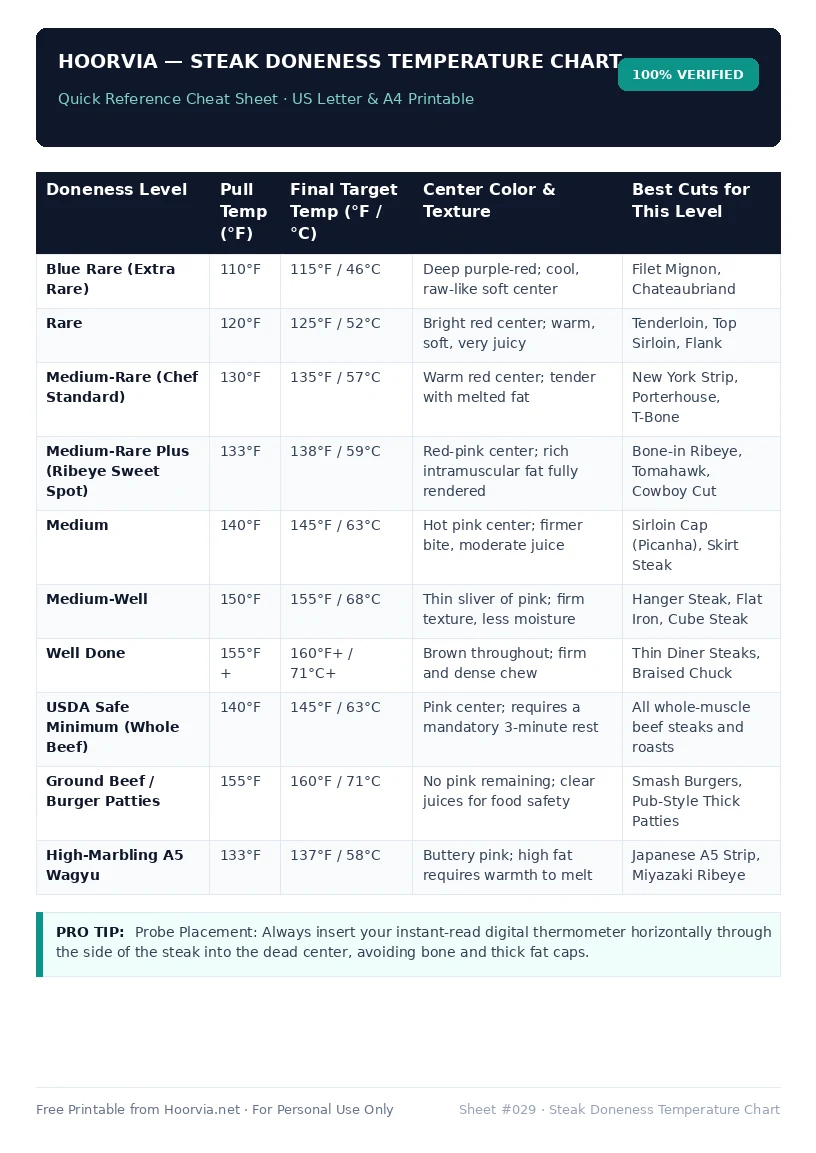
Download Your Free Printable Sheet
Download the printable PDF below. It is the same sheet shown in the preview above, ready to print on US Letter or A4 — open it and choose Print, with Scale set to Fit to Page.
💡 Pro Printing Tip: In your printer settings, set Scale to “Fit to Printable Area” and enable “Background Graphics” for color headers.