Cookie Baking Time, Temperature & Scoop Size Chart
Cookies continue baking on the hot aluminum sheet pan for 3 to 5 minutes after leaving the oven. Pull cookies when the outer 1/4-inch rim is golden-brown and the center still looks pale, puffy, and slightly underdone.
| Disher / Scoop Number | Dough Volume & Weight | Baked Diameter | Bake Time (350°F) | Spacing on Sheet Pan |
|---|---|---|---|---|
| Mini Scoop (#60 / #70) | 1 tbsp (15 g / 0.5 oz) | 2 inches | 7–9 min | 1.5 inches apart (16 per half-sheet) |
| Standard Medium (#40 Scoop) | 1.5 tbsp (25–28 g / 1 oz) | 2.75 to 3 inches | 9–11 min | 2 inches apart (12 per half-sheet) |
| Large Café (#24 / #20 Scoop) | 3 tbsp (50–55 g / 1.8 oz) | 3.75 to 4 inches | 12–14 min | 2.5 inches apart (6 to 8 per sheet) |
| Giant Bakery / Levain Style | 1/2 cup (115–140 g / 4.5 oz) | 4.5+ inches (Thick) | 14–17 min (at 375°F) | 3 inches apart (4 to 6 per sheet) |
| Cookie Style | Oven Temp (°F / °C) | Bake Time | Visual Pull Cue & Cooling Rule |
|---|---|---|---|
| Classic Chocolate Chip (Chewy) | 350°F / 175°C | 9–11 min | Golden rim, pale soft middle; cool 5 min on pan |
| Thin & Crispy Chocolate Chip | 350°F / 175°C | 12–14 min | Golden brown across top; transfer to wire rack after 2 min |
| Oatmeal Raisin / Oatmeal Choc | 350°F / 175°C | 10–12 min | Edges set, crackled center looks slightly glossy |
| Peanut Butter (Criss-Cross) | 350°F / 175°C | 9–11 min | Pull as soon as top loses wet shine (dries fast if overbaked) |
| Snickerdoodles (Cinnamon Sugar) | 375°F / 190°C | 8–10 min | Higher temp puffs dough then collapses into soft crackles |
| Rolled Sugar Cutouts (1/4" thick) | 350°F / 175°C | 8–10 min | Pull BEFORE edges brown to keep clean white/pastel look |
| Butter Shortbread Fingers | 325°F / 165°C | 18–22 min | Low heat bakes evenly to pale blonde crispness |
| Double Chocolate / Crinkle | 350°F / 175°C | 9–11 min | Pull when puffed and cracked; centers settle fudgy |
| French Macarons (Almond Flour) | 300°F / 150°C | 14–16 min | Ruffled 'feet' firm; does not wiggle when nudged |
| Desired Cookie Texture | Fat & Sugar Adjustment | Dough Temperature | Oven & Pan Technique |
|---|---|---|---|
| Thick, Soft & Bakery-Chewy | Melted butter + More brown sugar + 1 extra egg yolk | Chill dough 2 to 24 hrs (38°F) | Bake at 350°F–375°F on parchment paper |
| Thin, Lacy & Crisp | Room-temp butter + More white granulated sugar | Bake at room temp (70°F) | Bake at 350°F on bare or lightly greased sheet |
| Cakey & Pillow-Soft | Creamed cold butter + Cake flour + Baking powder | Chill 30 minutes | Pull 1 min early; cool on pan |
💡 Chef's Pro Tip: Never scoop cookie dough onto a warm baking sheet that just came out of the oven! A warm pan melts the butter before the cookie enters the oven, causing flat, greasy puddles.
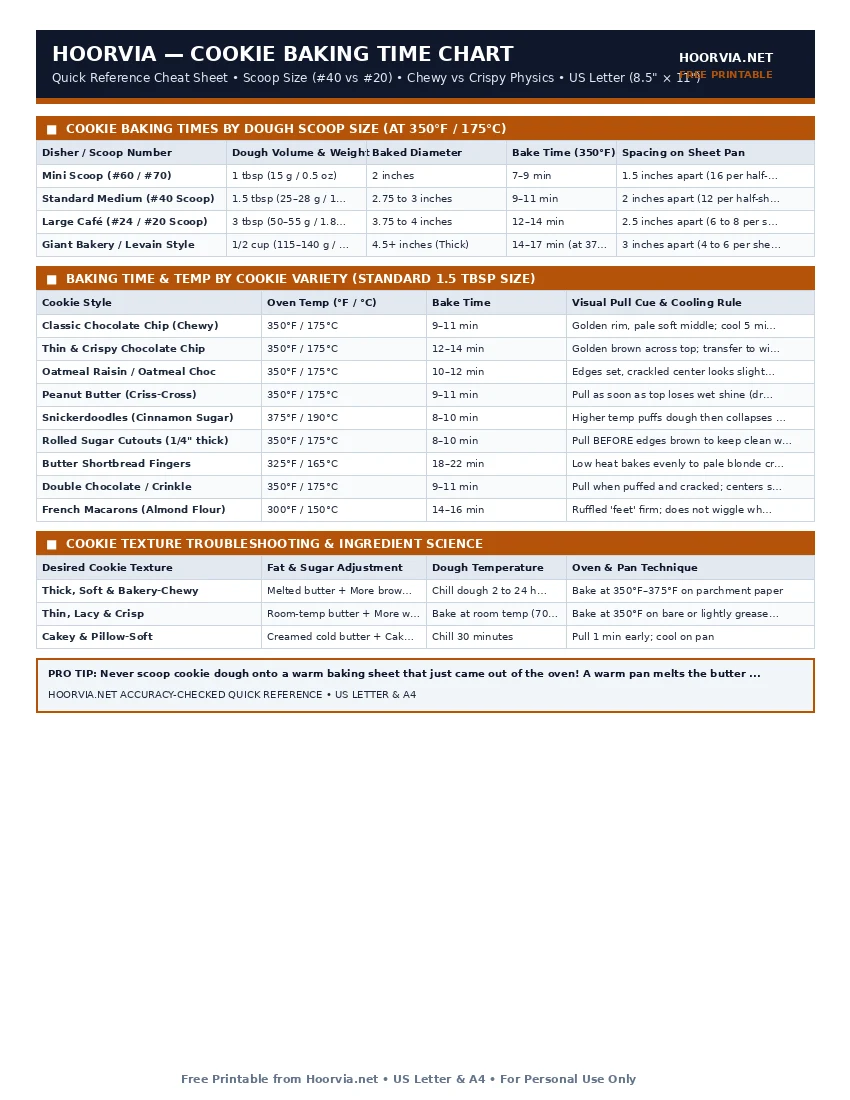
Printable Cheat Sheet Preview (US Letter & A4)
High-contrast, ink-saving layout designed for kitchen binders and refrigerator magnets. No sign-up required.
Parchment Paper vs. Silicone Mats (Silpat) for Cookies
Parchment paper provides gentle surface friction so cookies grip the paper, resulting in thicker centers and crisp, golden bottoms.
Frequently Asked Questions
Can I bake frozen cookie dough balls straight from the freezer?
Yes! Do not thaw them. Lower the oven temperature by 15°F (to 335°F) and add 2 to 3 extra minutes to the regular bake time.
How do I fix cookies that spread slightly out of round?
Immediately after pulling the hot tray from the oven, place a large round cutter or upside-down mug over each hot cookie and swirl it gently for 3 seconds.
Complete Baking & Pastry Reference Cluster (10 Free Sheets)
- 📄 Baking Ingredient Substitutions Cheat Sheet (#011)
- 📄 Baking Temperature Chart & Oven Heat Zones (#012)
- 📄 Baking Pan Size & Volume Conversion Chart (#013)
- 📄 Cake Pan Batter, Yield & Tier Serving Chart (#014)
- 📄 Bread Internal Temperature & Doneness Guide (#016)
- 📄 Yeast Conversion Chart (Instant, Active & Fresh) (#017)
- 📄 Flour Weight & Protein Conversion Chart (#018)
- 📄 Sugar & Liquid Sweetener Conversion Chart (#019)
- 📄 Baking Troubleshooting Diagnostic Chart (#020)